How to Apply for Scholarships in the USA (Complete 2026 Guide)
For many students, studying in the USA feels like a distant dream—mostly because of the cost.
But every year, thousands of students manage to go there on scholarships. Not because they are extraordinary, but because they understand how the process actually works.
One student I spoke to last year spent almost six months applying to different scholarships. He didn’t get any at first. But by the fourth attempt, he finally secured partial funding from a university in Texas.
“Honestly, I didn’t change my grades,” he said. “I just learned how to apply properly.”
That’s really what this guide is about.
First, understand what you’re applying for
Before you start applying everywhere, it helps to know the types of scholarships available.
Some are based on your academic results. These are called merit-based scholarships, and they usually go to students with strong GPAs or achievements.
Others are need-based, where universities try to support students who can’t afford the cost.
Then there are university scholarships, which many students overlook. In some cases, you don’t even need a separate application—once you apply for admission, you’re automatically considered.
Government and private scholarships also exist, though they tend to be more competitive. Still, many students get them every year.
What documents do you actually need?
If you’ve never applied before, this part can feel overwhelming.
Most scholarships will ask for similar things:
Your academic transcripts, English test scores like IELTS or TOEFL, a Statement of Purpose (SOP), recommendation letters, and a CV.
Some may also ask for a scholarship essay.
A senior student once told me something simple but useful:
“Don’t prepare documents when deadlines come. Prepare them before you even search for scholarships.”
It sounds obvious, but many people ignore it—and then rush at the last moment.
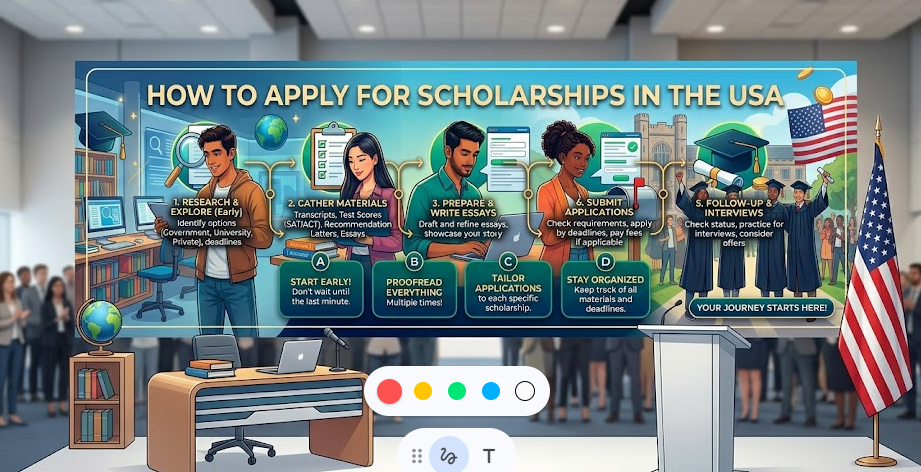
How the application process really works
Let’s not make this complicated.
Start with research—but do it properly
A lot of students just Google “scholarships in USA” and start applying randomly.
That usually doesn’t work.
Instead, narrow things down. Look for scholarships related to your subject, your level of study, and your background. University websites are often the most reliable place to start.
Always check eligibility first
This step sounds boring, but it’s critical.
Check the GPA requirement. Look at the English score. See if your country is eligible.
Many applications get rejected instantly—not because the student is weak, but because they didn’t meet a basic requirement.
Your documents matter more than you think
Grades are important, but they’re not everything.
Your SOP and CV tell your story.
One scholarship recipient explained it like this:
“Your grades get you noticed. Your story gets you selected.”
So don’t copy from the internet. Write something that actually reflects you.
Writing the essay (where most people fail)
This is the part students struggle with the most.
They try to sound “perfect” instead of being real.
You don’t need complicated words. You need clarity.
What are your goals?
Why does this scholarship matter to you?
What have you done so far?
Simple answers, written honestly, work better than fancy language.
Apply early—even if you think you’re ready
Deadlines create pressure, and pressure leads to mistakes.
Try to submit at least a couple of weeks early.
It gives you time to review everything—and trust me, you will find small mistakes if you check twice.
Keep track, or you’ll get lost
Once you apply to multiple scholarships, things get confusing.
A simple list helps:
Where you applied, deadlines, and responses.
It doesn’t have to be perfect. Just something you can follow.
What actually improves your chances?
There’s no shortcut—but there are patterns.
Students who succeed usually:
- Apply to multiple places
- Don’t depend on one opportunity
- Adjust their application slightly each time
- Focus on both big and small scholarships
And maybe most importantly—they keep going even after rejection.
Mistakes students keep repeating
Some mistakes come up again and again:
Missing deadlines, submitting incomplete documents, or sending the same SOP everywhere.
These aren’t big problems—but they have big consequences.
Avoiding them already puts you ahead of many applicants.
Where should beginners start?
If you’re new, don’t aim for the most competitive scholarships first.
Look for easier options:
No-essay scholarships, smaller private ones, or those with automatic consideration.
They may not be huge, but they’re a good starting point.
Timing matters more than you think
Most scholarship deadlines fall between October and January for Fall intake.
Some programs also accept applications between March and May.
A safe approach is to start preparing at least six months earlier.