FIFA World Cup Football Guide 2026: Everything You Need to Know About Teams, Players, Standings, Matches & Qualifiers
The FIFA World Cup is more than just a football tournament—it's the biggest sporting event on Earth. Every four years, billions of fans unite to watch the world's greatest football nations compete for the most prestigious trophy in sports.
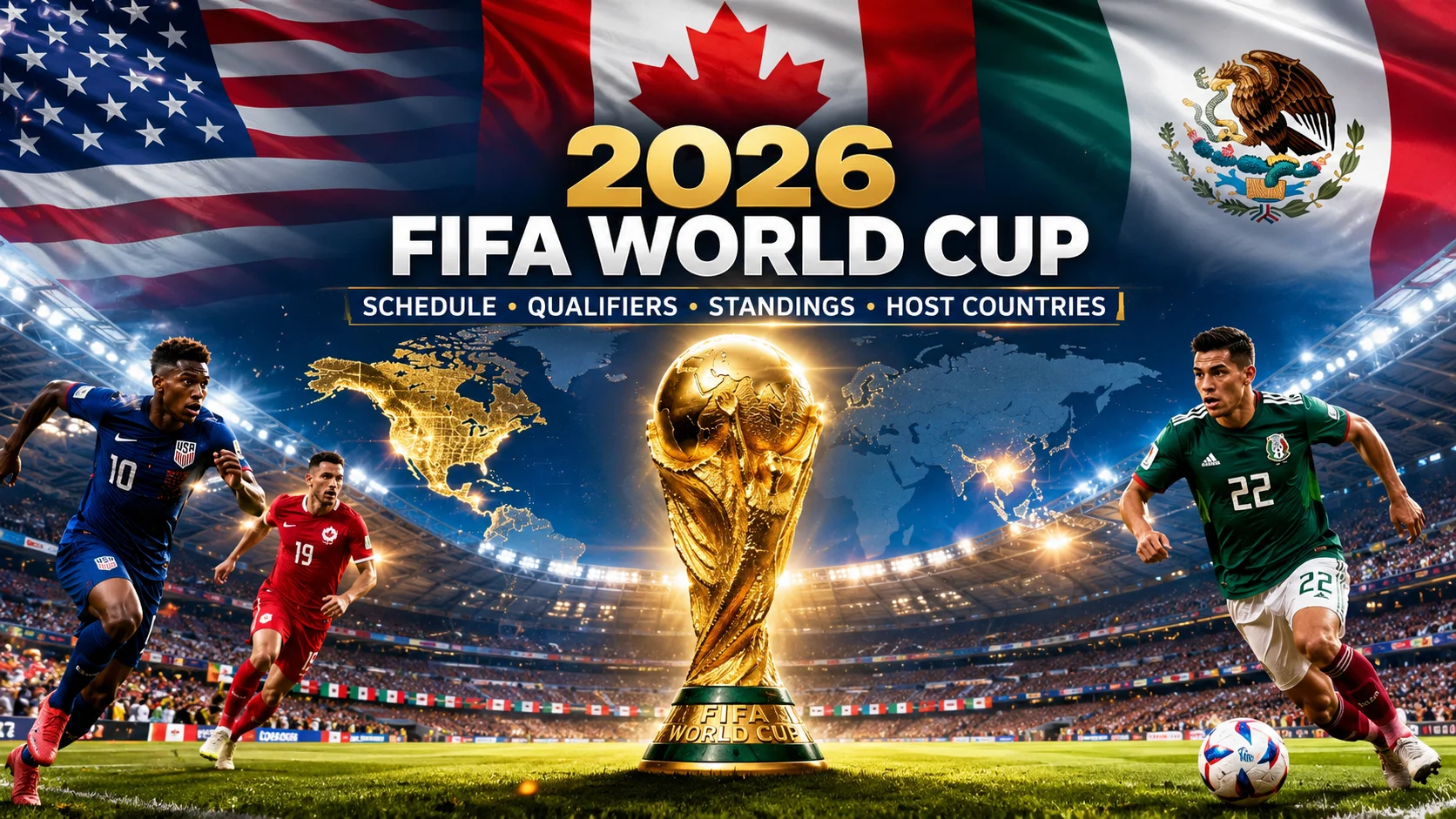
With the 2026 FIFA World Cup approaching, excitement has reached unprecedented levels. Hosted jointly by the United States, Canada, and Mexico, this edition promises more teams, more matches, more players, and more unforgettable moments than ever before.
Whether you're a lifelong football supporter or a new fan looking to understand the tournament, this comprehensive guide covers everything you need to know.
Key Points Summary
- The 2026 FIFA World Cup features 48 national teams.
- Hosted by USA, Canada, and Mexico.
- More than 100 matches will be played.
- Expanded group-stage format.
- Qualification includes every FIFA confederation.
- Hundreds of the world's best football players will participate.
- Live standings determine progression to knockout rounds.
- Millions of fans will follow daily match schedules worldwide.
What Is the FIFA World Cup?
The FIFA World Cup is the world's premier international football competition organized by FIFA. National teams from around the globe compete through lengthy qualification campaigns for the opportunity to become world champions.
Since its first tournament in 1930, the World Cup has produced legendary players, unforgettable goals, and historic matches that continue to inspire generations.
Why the 2026 FIFA World Cup Is Historic
The upcoming tournament introduces several major changes.
48 National Teams
For the first time in history:
- 48 qualified countries
- More opportunities for emerging football nations
- Greater continental representation
This expansion significantly increases global participation.
Three Host Nations
The tournament will be jointly hosted by:
- United States
- Canada
- Mexico
This marks the first World Cup hosted by three countries.
More Matches
The expanded tournament includes over 100 matches, making it the largest FIFA World Cup ever.
Fans can expect:
- Daily football action
- More knockout games
- Increased entertainment
- Larger global audiences
FIFA World Cup Football Teams
One of the biggest attractions of every World Cup is the incredible variety of football styles represented by different countries.
Traditional football powerhouses include:
- Brazil
- Argentina
- France
- Germany
- Spain
- England
- Italy
- Portugal
Meanwhile, rising nations continue challenging established giants, making every tournament more competitive.
The expanded 48-team format allows more countries to experience football's biggest stage.
World Cup Football Team List
The complete team list is finalized after continental qualification tournaments conclude.
Teams qualify through:
UEFA
European qualifying competition.
CONMEBOL
South American qualification.
CONCACAF
North America, Central America and Caribbean qualification.
AFC
Asian qualification.
CAF
African qualification.
OFC
Oceania qualification.
Intercontinental playoffs determine several remaining qualification spots.
FIFA World Cup Players to Watch
Every World Cup introduces new stars while legendary players seek international glory.
Key qualities of elite World Cup players include:
- Technical skill
- Speed
- Tactical intelligence
- Leadership
- Consistency under pressure
Fans eagerly watch young talents alongside experienced captains who can change matches in a single moment.
Club Football vs International Football
International tournaments differ significantly from club football.
Club Football
- Year-round competitions
- Daily team training
- Frequent transfers
- League formats
International Football
- National pride
- Limited preparation time
- Short tournaments
- High-pressure knockout matches
This difference makes the FIFA World Cup especially unpredictable.
FIFA Club World Cup vs FIFA World Cup
Many fans confuse these tournaments.
| FIFA World Cup | FIFA Club World Cup |
|---|---|
| National Teams | Professional Clubs |
| Every four years | Regular club competition |
| Countries compete | Clubs compete |
| National players | Club squads |
Although both are organized by FIFA, they are completely different competitions.
Football World Cup Qualifiers Explained
Qualifiers determine which nations earn a place in the tournament.
The process lasts nearly three years.
Each confederation receives a specific number of qualification places based on FIFA's allocation.
Qualification often produces dramatic moments, including:
- Last-minute goals
- Penalty shootouts
- Historic upsets
- Surprise qualifications
FIFA World Cup Standings
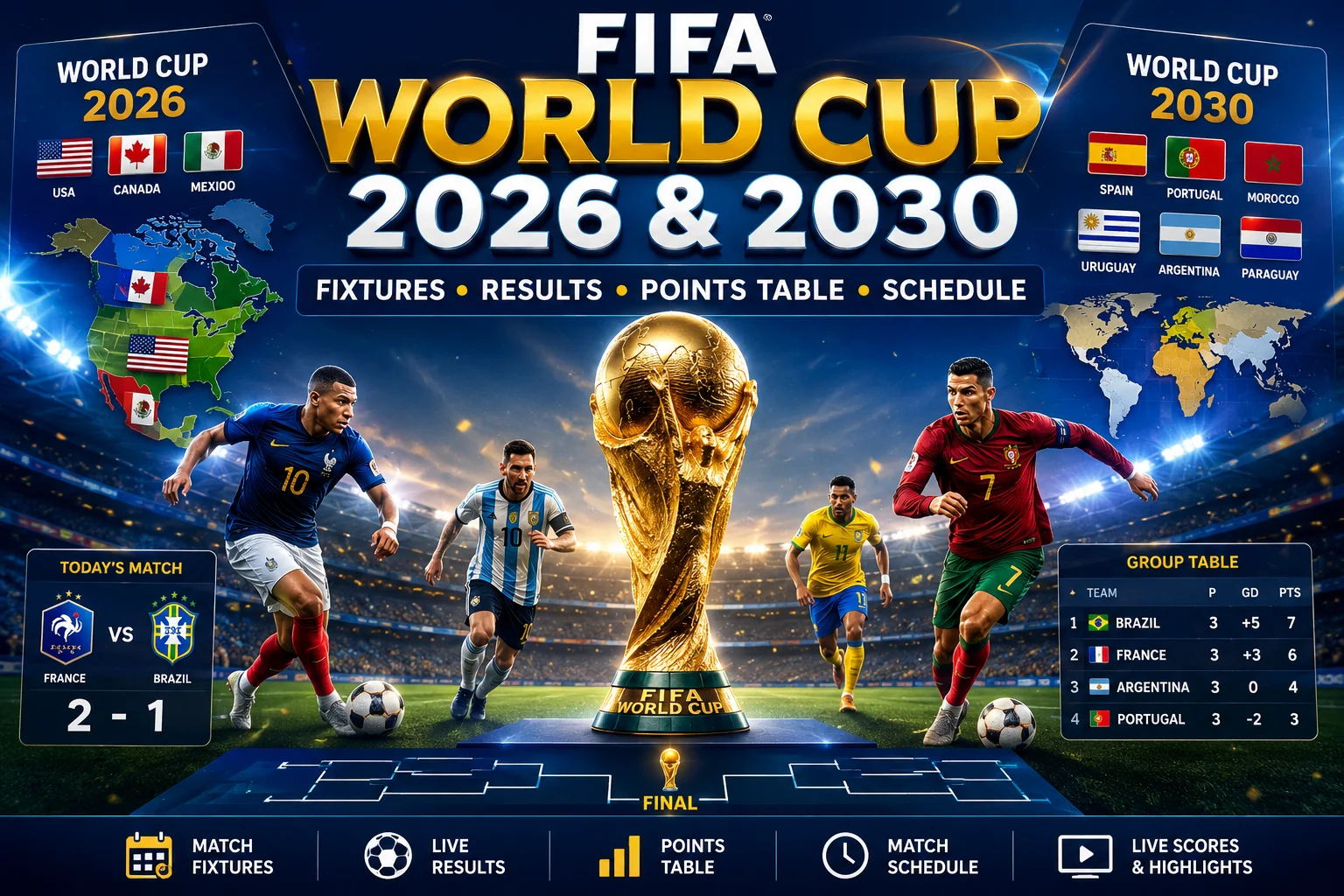
During the tournament, group standings are updated after every match.
Standings usually include:
- Matches Played
- Wins
- Draws
- Losses
- Goals Scored
- Goals Conceded
- Goal Difference
- Points
These standings determine which teams advance to the knockout rounds.
Understanding the Tournament Bracket
Once group matches finish, qualified teams enter the knockout stage.
Typical knockout rounds include:
- Round of 32 (new format)
- Round of 16
- Quarter-finals
- Semi-finals
- Third-place Playoff
- Final
Every knockout game is win-or-go-home.
If teams are tied after normal time:
- Extra time
- Penalty shootout
FIFA World Cup Matches Today
One of the most searched topics during the tournament is today's match schedule.
Fans typically want to know:
- Kickoff times
- Stadiums
- Team lineups
- Live standings
- Injury updates
- Broadcast information
Checking official FIFA schedules ensures the most accurate and up-to-date match information.
How Teams Prepare for the World Cup
Preparation begins years before the tournament.
National teams focus on:
Tactical Training
Developing attacking and defensive systems.
Fitness
Maintaining peak physical condition.
Friendly Matches
Testing formations and squad depth.
Player Selection
Choosing the strongest squad based on form and fitness.
Greatest Moments in FIFA World Cup History
The tournament has produced countless unforgettable memories.
Some iconic moments include:
- Stunning bicycle kicks
- Last-minute winners
- Historic penalty shootouts
- Record-breaking goals
- Underdog victories
- Legendary championship celebrations
These moments continue to define football history.
Technology in Modern FIFA World Cup
Technology has transformed modern football.
Innovations include:
VAR (Video Assistant Referee)
Helps officials review critical decisions.
Goal-Line Technology
Confirms whether the ball completely crossed the goal line.
Semi-Automated Offside Technology
Provides faster and more accurate offside decisions.
These technologies improve fairness and accuracy throughout the tournament.
Economic Impact of the FIFA World Cup
Hosting the tournament brings enormous economic benefits.
These include:
- Tourism growth
- Infrastructure investment
- Job creation
- Global media exposure
- Sponsorship revenue
- Local business opportunities
The World Cup generates billions of dollars in economic activity worldwide.
Tips for Following the World Cup
To enjoy the tournament:
- Follow official schedules.
- Track live standings.
- Watch pre-match analysis.
- Learn about emerging players.
- Understand group scenarios.
- Follow team news and injuries.
- Use official FIFA apps for updates.
Why Football Fans Love the World Cup
Unlike domestic leagues, every match carries enormous importance.
Fans experience:
- National pride
- Emotional rivalries
- Historic achievements
- Global celebrations
- Unpredictable results
No other football tournament captures worldwide attention quite like the FIFA World Cup.
The Future of FIFA World Cup Football
Football continues evolving through:
- Improved technology
- Expanded tournaments
- Greater global participation
- Better youth development
- Increased women's football investment
- Enhanced fan experiences
The 2026 tournament represents the beginning of a new era for international football.
FAQ
1. How many teams will play in the 2026 FIFA World Cup?
The tournament will feature 48 national teams, making it the largest FIFA World Cup in history.
2. Which countries are hosting the 2026 FIFA World Cup?
The United States, Canada, and Mexico are the official host nations.
3. How are teams selected for the World Cup?
Teams qualify through regional qualification tournaments organized by their continental football confederations.
4. How many matches are played in the tournament?
The expanded format includes more than 100 matches from the group stage through the final.
5. What is the difference between the FIFA World Cup and the FIFA Club World Cup?
The FIFA World Cup features national teams, while the FIFA Club World Cup features professional club teams.
6. How are World Cup standings calculated?
Standings are based on points earned through wins and draws, with goal difference and goals scored used as tiebreakers when necessary.
7. Where can I check today's FIFA World Cup matches?
The official FIFA website and licensed broadcasters provide the latest match schedules, kickoff times, and live updates.
8. Which football confederations participate in qualification?
UEFA, CONMEBOL, CONCACAF, AFC, CAF, and OFC all organize qualification tournaments for their member nations.